> For the complete documentation index, see [llms.txt](https://icrypto.gitbook.io/whitepaper/llms.txt). Markdown versions of documentation pages are available by appending `.md` to page URLs; this page is available as [Markdown](https://icrypto.gitbook.io/whitepaper/features/telegram-bot/smart-alerts/explore-alerts.md).
# Explore Alerts
Explore and follow alerts from other traders and experts
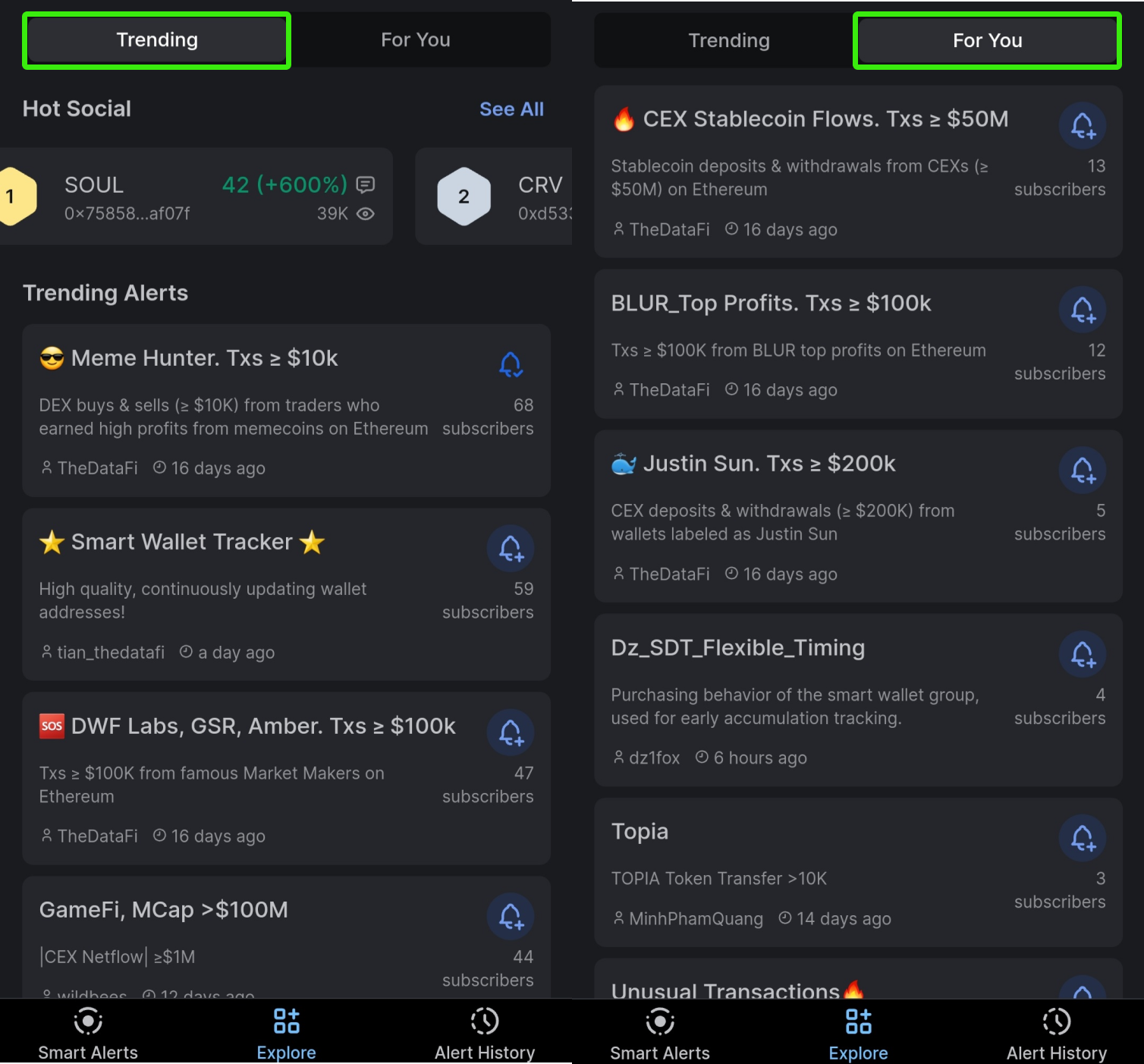
## A. Trending & For You Page
Section **Explore** allows you to see and subscribe to alerts from other users, especially from crypto experts who got most subscriptions.
***
## **B. How to Subscribe to an Alert?**
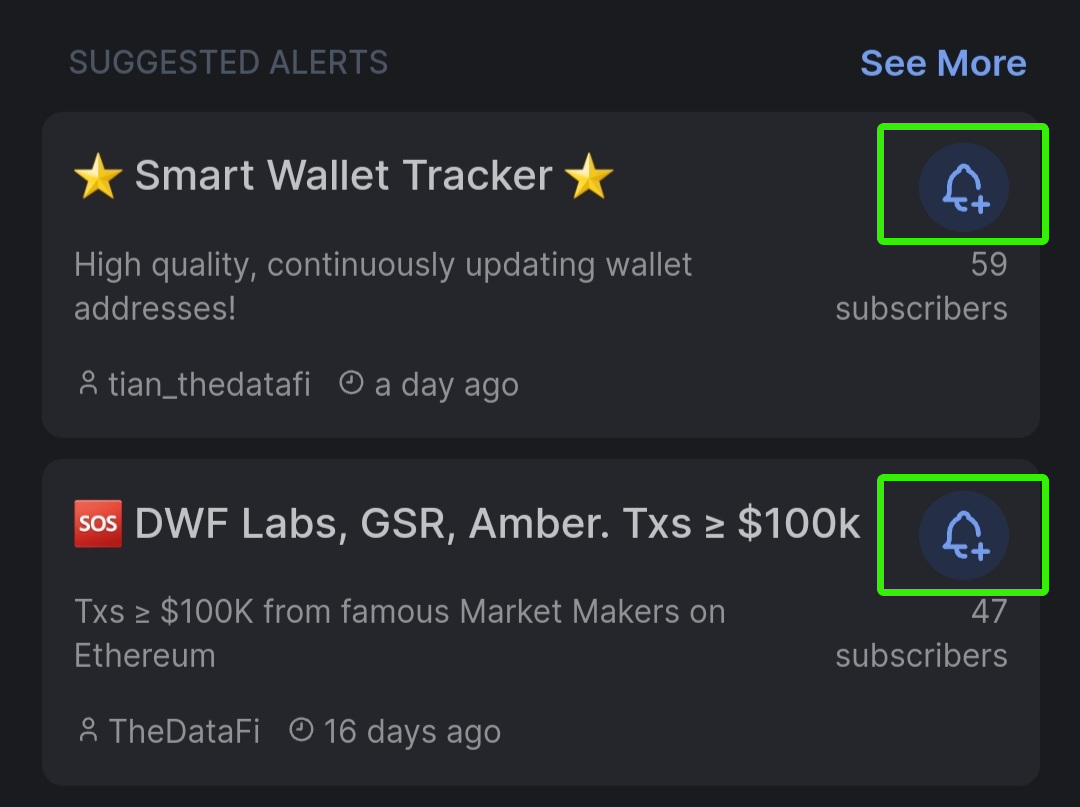
To subscribe to any alert, simply click to 🔔 at the corner of each alert.
### See Alert Settings
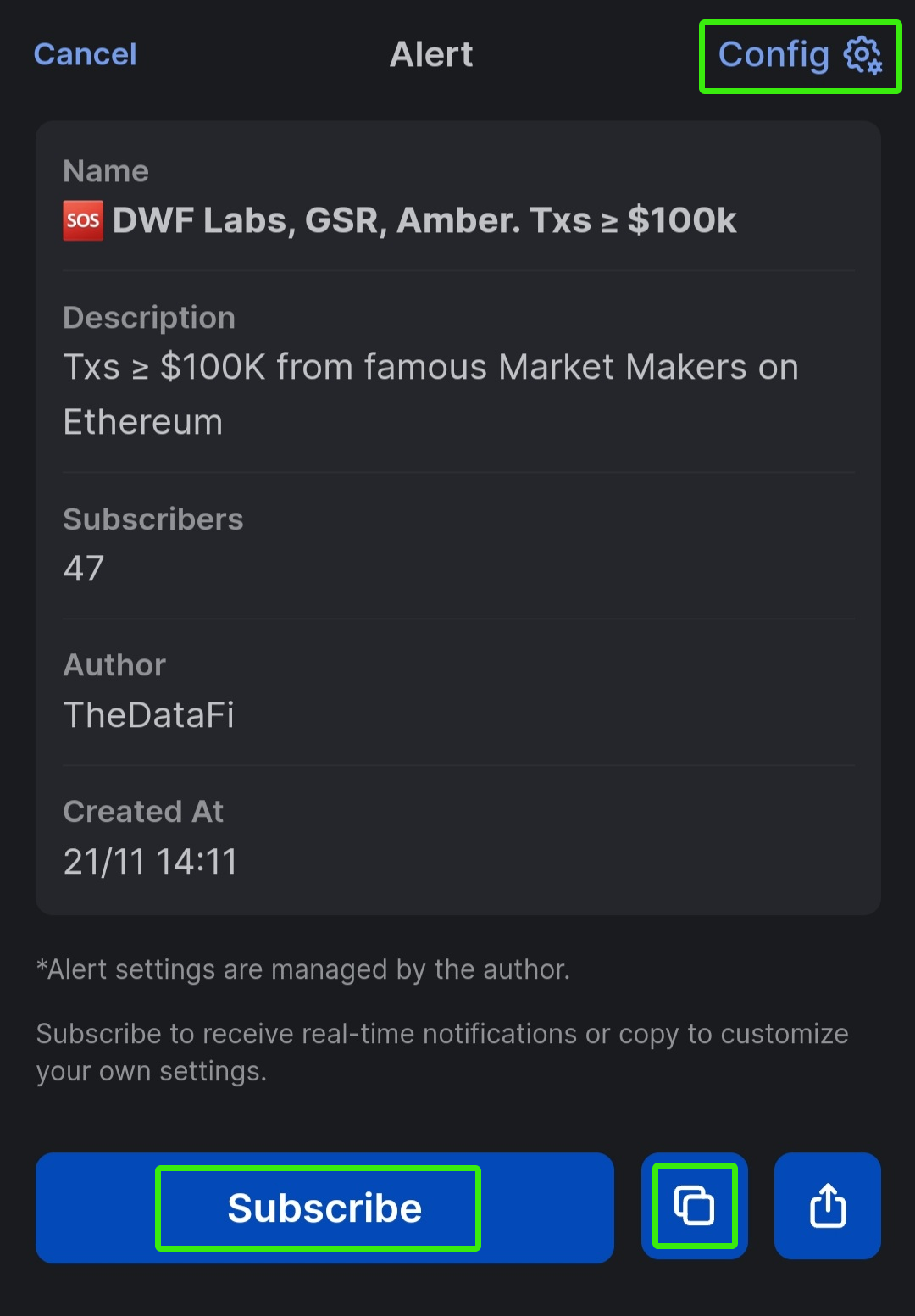
Before subscribing, you can check its description and **Config** by tapping an alert.
You can also **Copy** the alert config for your own usage.
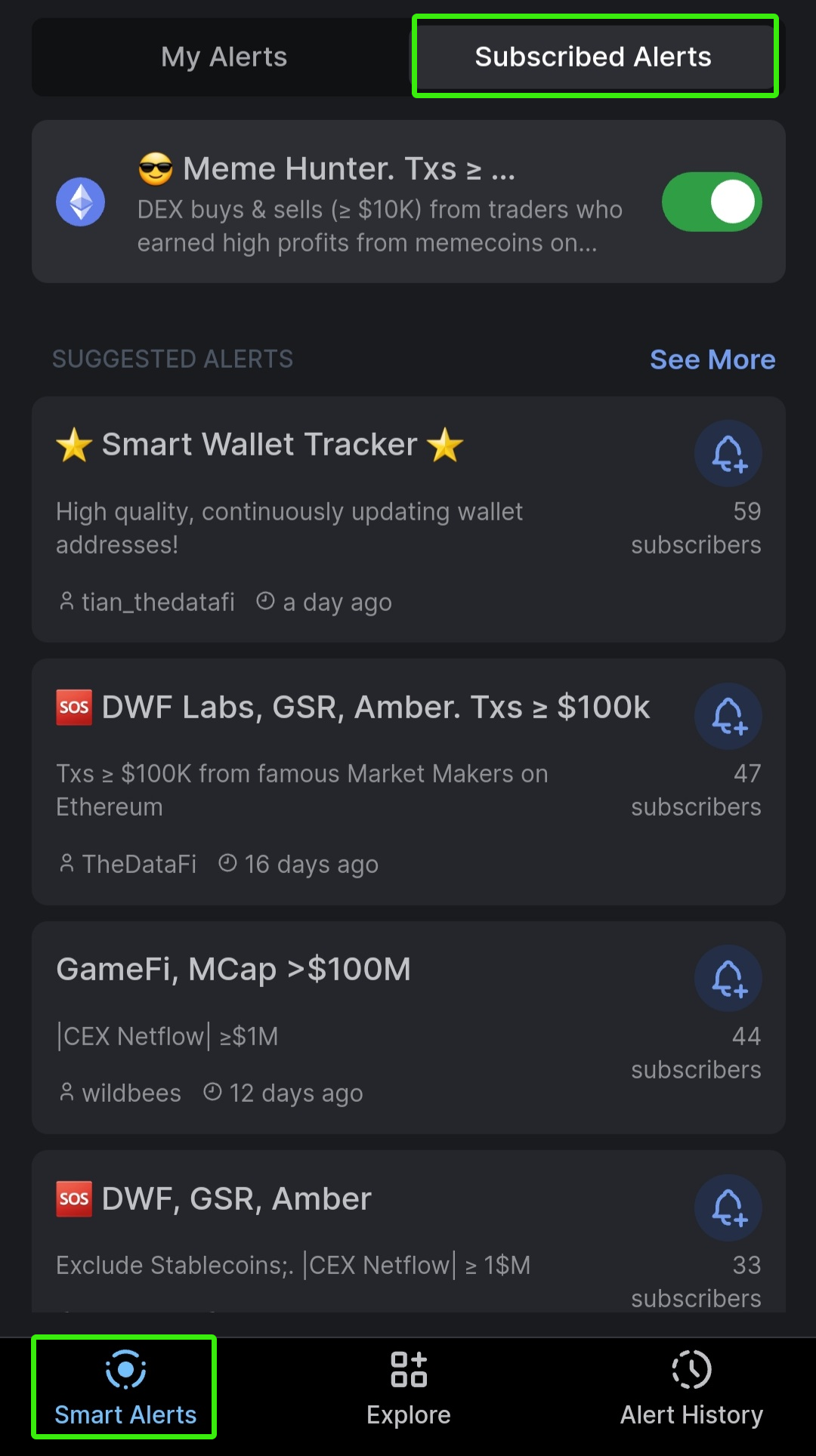
### **Subscribed Alerts**
Once you subscribe to an alert, you can track your subscriptions here.
***
## **C. How to Create a Public Alert?**
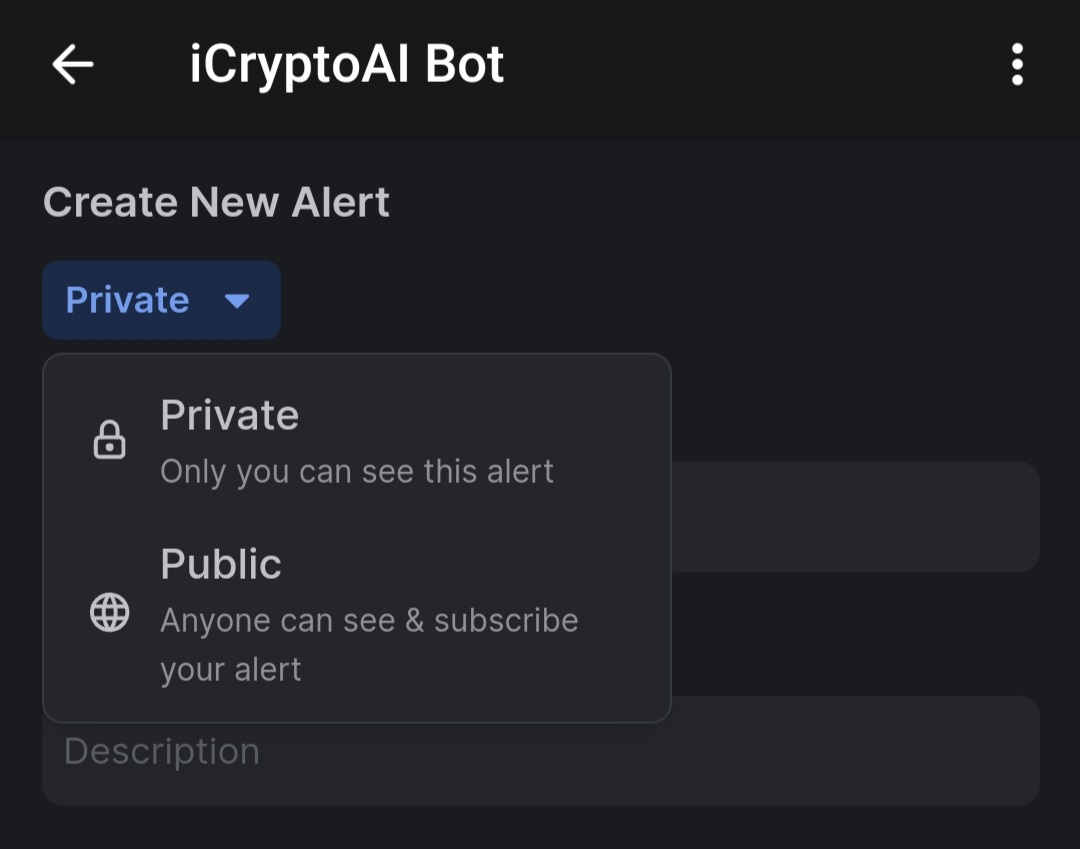
During the process of creating an alert, you are able to select whether your alert's setting is private or public.
By choosing **Public**, you allow other users to see its settings and subscribe to your alert.
***
## D. Alert History
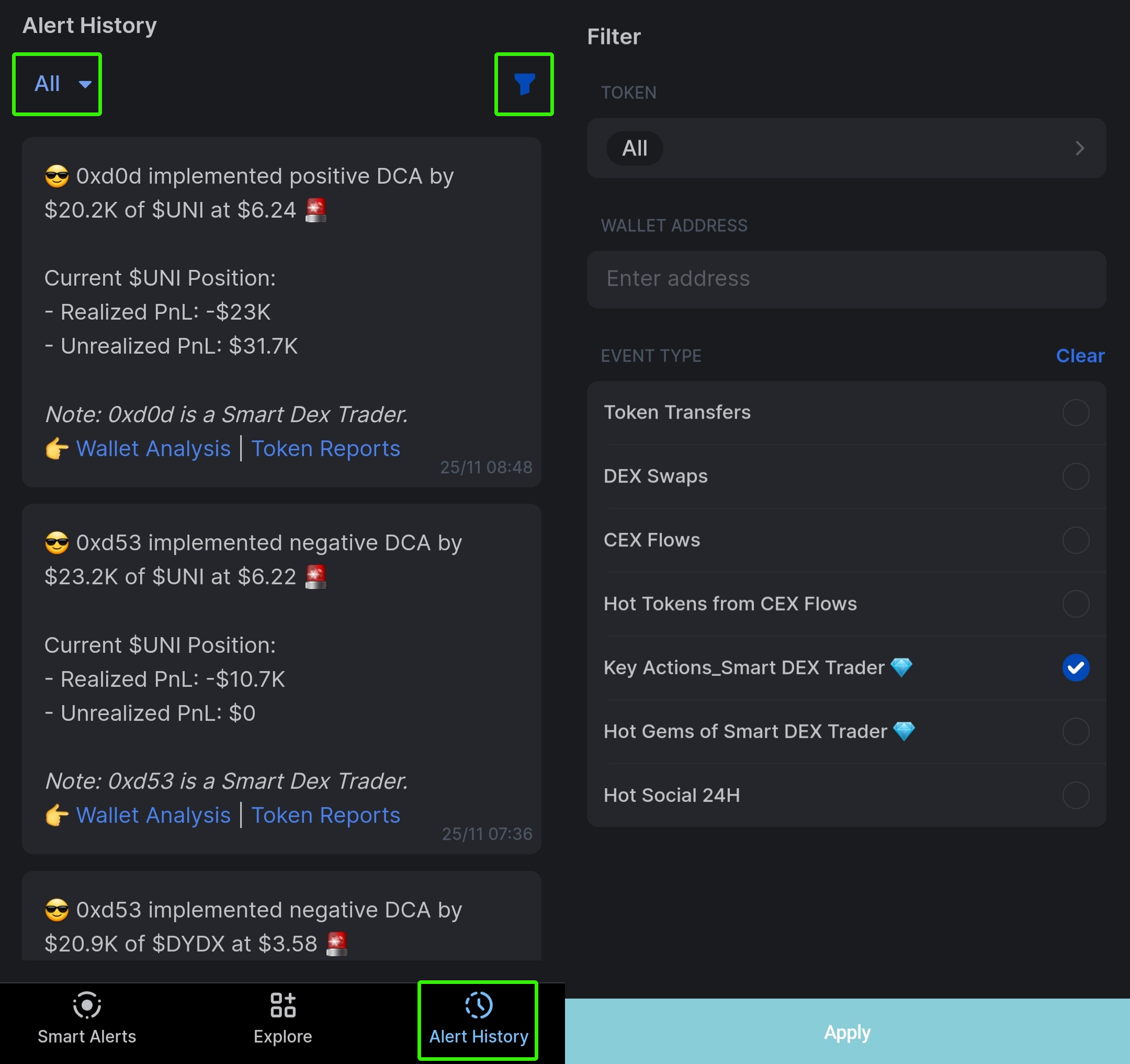
To quickly track back your historical alerts, you can check it out at **Alert History** section.
You can also filter out unneccessary alert types, tokens, wallet addresses and event types.